
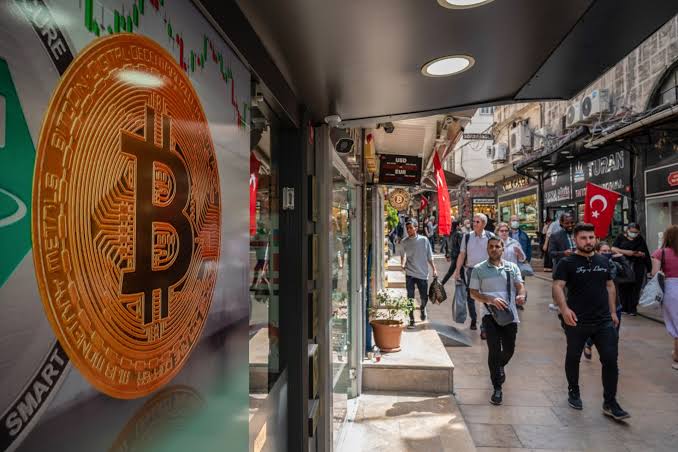
The withdrawal test: where exchanges show their true face
Any auditor will tell you the same thing: you learn little about an exchange from its deposit flow and everything from its withdrawal flow. Deposits are frictionless by commercial design. Withdrawals are where KYC rules, anti-money-laundering checks, network mechanics and security holds all converge — and where a careless user can genuinely lose money through a single wrong menu selection. This guide covers both withdrawal types on ICRYPEX: Turkish lira to your bank account, and cryptocurrency to an external wallet.
Context for newcomers: ICRYPEX is a Turkish exchange, founded 2018 in Istanbul, operating under MASAK anti-money-laundering obligations and the SPK licensing process introduced by Law No. 7518. Both regimes shape the withdrawal rules described below — the own-name IBAN rule in particular is regulation, not company preference. If you have not read it yet, our full platform review covers the wider regulatory picture.
One principle before the mechanics. On an exchange, your crypto sits in custodial storage: the platform holds the private keys, the way a bank holds deposits. A withdrawal to your own non-custodial wallet moves the asset into your personal safe — full control, full responsibility, and a seed phrase that no support desk can ever reset if lost. Both models are legitimate; confusion between them is where losses happen.
Withdrawing TRY to your bank account
The fiat exit is the simpler of the two flows. What matters:
- Sell to TRY if needed. You can only withdraw lira you actually hold, so convert crypto to TRY on the spot market first. With 220+ trading pairs including deep TRY pairs, per the official site, this is usually a single trade.
- Open the TRY withdrawal form in the wallet section and enter the amount.
- Enter your own IBAN. The bank account must be held in your name — exactly the identity on your KYC file. Third-party accounts, a spouse’s account, a business account under another name: all rejected by design. This is a MASAK anti-money-laundering rule across the Turkish industry.
- Review the fee and confirm with your
2FAcode and the email confirmation. - Wait for the bank leg. According to the official ICRYPEX website, TRY transfers process 24/7 with most Turkish banks, so evenings and weekends are generally not a blocker. Compliance reviews can still add time on larger or unusual transfers.
Practical notes: deposits on the platform are free per the official fee schedule, and any TRY withdrawal fee is displayed before you confirm — check the current figure on the withdrawal screen rather than trusting third-party tables, ours included. If a transfer has not arrived within the expected window, check your email for an unclicked confirmation link before anything else; it is the most common “stuck withdrawal” in existence.
Plan your exit before you enter
Understand fees and withdrawal rules on any platform before depositing — compare conditions side by side.
Withdrawing crypto: the full procedure
This is the flow where attention to detail pays. Follow it exactly, every time, even after the hundredth withdrawal — routine is precisely when errors slip through.
- Log in securely and open the withdrawal section. Bookmark-only logins, app-based 2FA — our login security guide covers the groundwork. KYC must be complete; withdrawal availability and limits depend on your verification tier.
- Select the asset — say,
USDT— and check your available balance. Funds locked in staking (lock-ups run 7 to 180 days on this platform) or sitting in open orders are not withdrawable until released. - Choose the network. The single most important click on this page. USDT alone exists on multiple networks —
TRC-20(Tron),ERC-20(Ethereum), Avalanche C-Chain and others — and the network you select here must be the network the receiving wallet expects. The next section is devoted entirely to this decision. - Paste the destination address. Copy it from the receiving wallet — never type it, never take it from a chat message or an email. After pasting, verify the first six and last six characters against the source. Clipboard-hijacking malware that silently swaps crypto addresses is a real, documented attack class.
- Use the address whitelist. ICRYPEX supports withdrawal address whitelisting; add your regular addresses to it. A whitelist means a thief who breaches your account still cannot send funds to a new address without passing extra confirmations and delays.
- Send a test amount first. For any new address or network: withdraw the minimum, confirm arrival, then send the rest. Two fees instead of one is the cheapest insurance in crypto.
- Confirm with 2FA and email, then note the transaction hash (
TXID) once the withdrawal broadcasts. - Track it in a block explorer for the relevant network until the receiving side credits. An on-chain confirmed transaction that has not appeared in the destination wallet usually means a wallet display issue (missing token contract, wrong network selected in the wallet) rather than lost funds.
Networks: the mistake that burns money
Read this section twice. It is the difference between a routine transfer and an unrecoverable loss.
Many assets — USDT above all — exist as parallel tokens on several independent blockchains. “USDT” on Tron, on Ethereum and on Avalanche are three different tokens on three different networks that happen to share a price. When you withdraw, the exchange asks which network to use. When you deposit somewhere, that platform gives you an address on a specific network. These two selections must match. The address format sometimes will not even save you: Ethereum and Avalanche C-Chain addresses are visually identical (0x...), so a transfer over the wrong one of those two can look perfectly valid at every step and still strand your tokens where the recipient cannot reach them.
Critical warning — wrong network means lost funds: sending USDT (or any token) over a network the receiving wallet does not support can destroy the funds permanently. A blockchain transaction, once confirmed, cannot be cancelled, reversed or refunded — not by ICRYPEX, not by any support desk, not by anyone. Recovery, where technically possible at all, depends entirely on the goodwill and capability of the receiving platform and can involve fees or simply be refused. Before every single withdrawal, confirm that the network selected on the ICRYPEX withdrawal screen is exactly the network of the deposit address — and when in doubt, send a small test amount first. Thirty seconds of checking versus a total loss: that is the trade.
How the common USDT networks compare in character:
| Network | Address looks like | Typical speed | Fee character | Best suited for |
|---|---|---|---|---|
TRC-20 (Tron) | Starts with T | Minutes | Low — the budget workhorse for stablecoin transfers | Exchange-to-exchange USDT moves, cost-sensitive transfers |
ERC-20 (Ethereum) | Starts with 0x | Minutes, longer under congestion | Highest of the three; spikes when Ethereum is busy | Interacting with Ethereum DeFi, wallets and services that only support Ethereum |
| Avalanche C-Chain | Starts with 0x — visually identical to Ethereum | Seconds to minutes | Low | Avalanche ecosystem, including the ICPX token, which lives natively on this chain |
The dangerous pair in that table is the last two: identical address format, different chains. A valid-looking address is not confirmation of a correct network. Only the explicit network label on both sides is.
In incident reviews, wrong-network transfers cluster around two moments: a user’s first withdrawal to a new platform, and routine transfers done in a hurry on mobile. The countermeasures are procedural, not technical — a written personal checklist (asset, network, first/last address characters, test amount for new routes) and a rule that no withdrawal happens in under one minute. Slow is smooth; smooth is cheap.
Limits, tiers and fees
Withdrawal limits on ICRYPEX scale with your KYC verification tier — the platform operates roughly six tiers up to VIP, and higher verification unlocks higher daily and monthly ceilings. We deliberately do not print specific numbers here: limit tables change, and a stale figure is worse than none. Check your current limits in the account dashboard or on official ICRYPEX channels before planning a large transfer.
On fees, the structure per the official site: deposits are free; TRY withdrawals carry a bank-transfer fee shown at confirmation; crypto withdrawal fees vary by asset and network, reflecting real network costs. Fee-saving habits that actually work:
- Pick the cheap network when you have the choice. For USDT, TRC-20 or Avalanche C-Chain instead of ERC-20 — provided, always, that the receiving side supports it.
- Batch withdrawals. Fixed per-withdrawal fees punish many small transfers; one consolidated withdrawal is cheaper than five fragments.
- Avoid Ethereum rush hours if you must use ERC-20 — congestion pricing is real, and off-peak transfers cost meaningfully less.
- Do not over-optimize. Saving two dollars by skipping a test transaction on a new route is the worst trade in this guide.
Why withdrawals get delayed — and what actually helps
A withdrawal that does not land immediately is usually a process, not a problem. The realistic causes, in rough order of frequency:
- Unclicked email confirmation. The withdrawal waits for you. Check inbox and spam first, always.
- Security holds after credential changes. A recent password or 2FA change commonly triggers a temporary withdrawal freeze — deliberately, so that an account thief cannot change your password and drain the balance in the same hour. Plan credential changes away from withdrawal days.
- First-withdrawal and new-address reviews. New destinations get extra scrutiny; whitelisted addresses clear faster on subsequent transfers.
- AML compliance checks. Larger or pattern-breaking transfers can pause for manual review under MASAK obligations. This is Turkish law operating as designed; responding promptly to any official document request through the platform shortens it.
- Network congestion. Once the transaction has a TXID, the exchange’s part is done — track the hash in a block explorer and let the network work through its queue.
- Hot-wallet replenishment. Exchanges keep the majority of assets in cold storage (ICRYPEX states this too, per its official security page). A large withdrawal can wait for an internal cold-to-hot transfer — slower, but a sign the custody model works as advertised.
Escalation path when nothing moves: email confirmation checked, transaction status checked in the account, TXID checked in an explorer if one exists — then, and only then, official support via icrypex.com with your withdrawal details ready. Never hand the case to “recovery agents” or “support staff” who message you first on social platforms; every one of them is a scammer, and stuck-withdrawal complaints are exactly the bait they trawl for.
Move at your own pace
Test the full deposit-to-withdrawal cycle with a small amount before committing serious funds anywhere.
The graduation step: withdrawing to your own wallet
The most important withdrawal you will ever make is the one that moves long-term holdings off any exchange and into self-custody. The reasoning is structural: an exchange balance is a claim on a company — a well-run company, perhaps, with cold storage and 24/7 monitoring, but a company nonetheless, exposed to hacks, insolvency and regulatory freezes. Assets in a non-custodial wallet are a claim on nobody. The blockchain enforces your ownership directly.
The price of that independence is stated bluntly: the seed phrase is everything. Twelve or twenty-four words, generated by your wallet, written on paper (never in a screenshot, never in cloud notes), stored where fire and family disputes cannot reach it. Lose the phrase and the funds are gone — there is no password reset in self-custody. Leak the phrase and the funds are equally gone — anyone holding those words holds the money. No legitimate service, ever, will ask you to type it anywhere.
The mechanics are the same crypto-withdrawal flow described above: hardware or reputable software wallet, correct network selected on both sides, test amount, then the balance. For Avalanche-based assets like ICPX, that means the C-Chain network and a wallet configured for it — details in our token guide. Keep on the exchange only what you actively trade or stake; move the rest to keys you control. That single habit, practiced consistently, has outlived every exchange failure in this industry’s short and instructive history.
Frequently Asked Questions
How do I withdraw Turkish lira (TRY) from ICRYPEX?
TRY withdrawals go by bank transfer to a Turkish bank account held in your own name — the IBAN owner must match your KYC identity, a MASAK anti-money-laundering requirement. Per the official ICRYPEX site, transfers work 24/7 with most Turkish banks. Enter your IBAN, confirm with 2FA and email, and the transfer typically arrives quickly, though compliance checks can add time.
Can I withdraw to someone else’s bank account?
No. Third-party withdrawals are blocked by design: the receiving account name must match the verified account holder. This is standard Turkish AML practice, not an ICRYPEX quirk. Attempting it usually results in the transfer bouncing back after a delay.
What are the ICRYPEX withdrawal fees?
Crypto withdrawal fees depend on the asset and the network you choose — an ERC-20 USDT withdrawal costs substantially more than the same USDT over TRC-20 or Avalanche C-Chain, reflecting network costs. TRY withdrawals go by bank transfer, with any fee shown before you confirm. Always check the exact current fee on the withdrawal screen; figures change with network conditions.
What happens if I choose the wrong network for a withdrawal?
In the best case the receiving platform supports the network you used and can credit or recover the funds, sometimes for a fee. In the worst case — for example, tokens sent to a wallet or contract that cannot access that network — the funds are permanently unrecoverable. No support desk can reverse a confirmed blockchain transaction. This is why the network shown on the withdrawal screen must exactly match the network of the deposit address, every single time.
How long does an ICRYPEX withdrawal take?
TRY bank transfers are generally fast, with 24/7 processing at most Turkish banks per the official site. Crypto withdrawals pass an internal review and then depend on network congestion: TRC-20 and Avalanche C-Chain typically confirm within minutes, ERC-20 can take longer when Ethereum is busy. First withdrawals, recent password changes and AML reviews can add hold time — that is a security feature, not a fault.
What are the withdrawal limits on ICRYPEX?
Limits depend on your KYC verification tier — ICRYPEX operates roughly six account tiers up to VIP, and higher tiers unlock higher daily and monthly limits. The exact numbers change and should be verified in your account dashboard or on official ICRYPEX channels; treat any specific limit you read on third-party sites, including this one, as potentially outdated.
Why is my withdrawal stuck or delayed?
The usual suspects: a temporary hold after a password or 2FA change, an AML compliance review, an unconfirmed email approval sitting in your spam folder, network congestion, or the exchange topping up its hot wallet from cold storage for larger sums. Check your email first, then the transaction status, then contact official support through icrypex.com if nothing moves. Never accept “help” from people who contact you first.
Figures on this page (fees, limits, product specs) are compiled from official ICRYPEX sources and public third-party reviews; always verify current values on the official website.